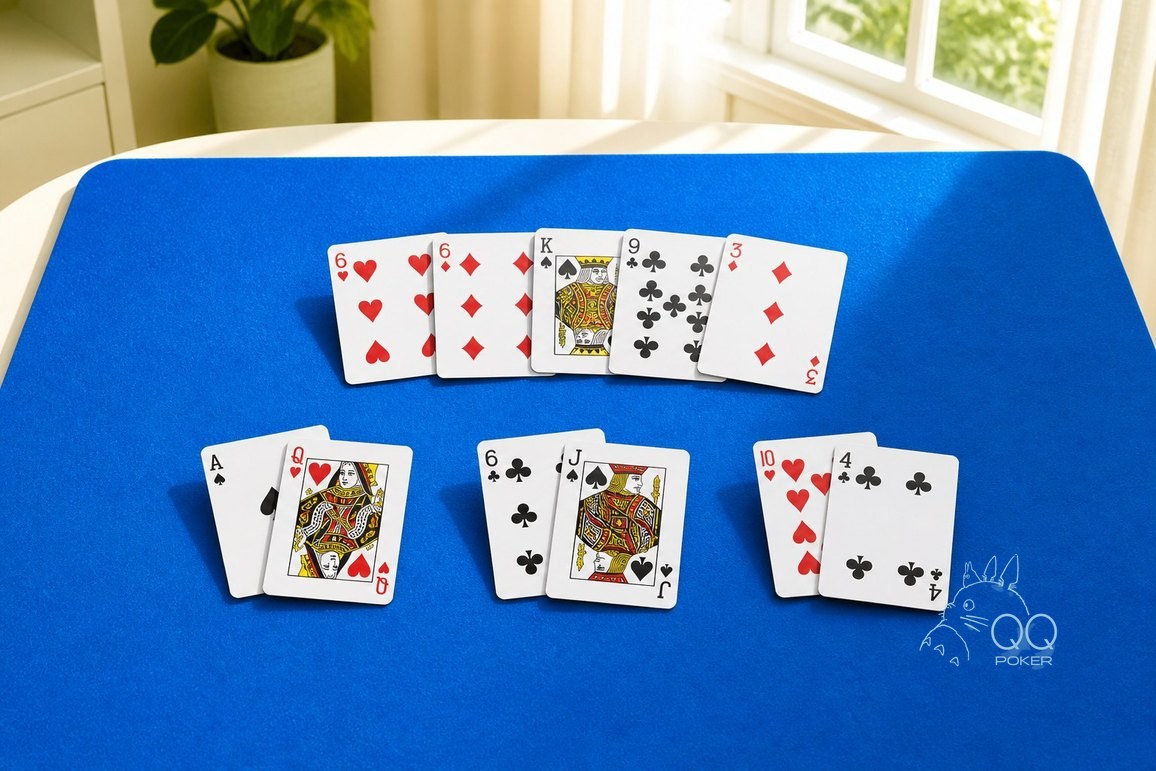
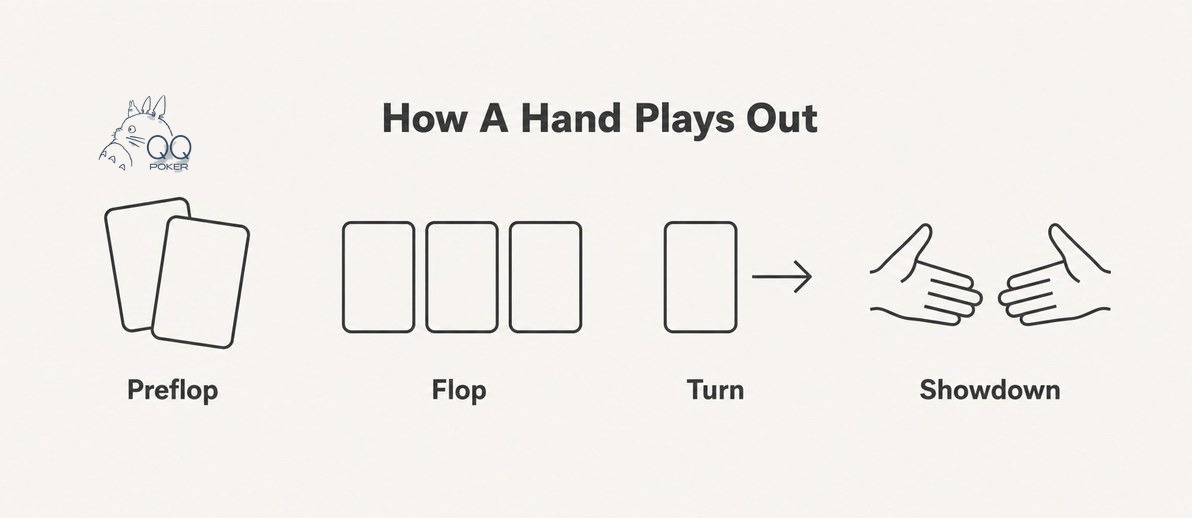
New players usually try to take in a whole hand of Texas Holdem at once and end up remembering only who won. A hand is far easier to follow if each of the four betting rounds is treated as a separate question. Four streets, four questions, and that is the whole hand, right through to showdown.

Look at where you are sitting before you look at your cards. The same two cards are comfortable on the button and awkward from early position, and nothing about the cards changed. Players who reverse this order enter far too many pots from seats that make the rest of the hand hard.
Three cards land at once, and they almost never help everybody equally. Before deciding anything, work out which player this board fits best. If it fits the other person’s likely holdings better than yours, that is useful to know before you put money in, not after.
By the turn the pot is big enough that continuing without a reason is costly, and by the river it is the most expensive street in the hand. A good test: if you cannot say in one sentence what you are hoping happens next, that is a sign to stop.

Holding the second or third best possible hand and building a large pot with it. When the other player does have the top hand, the loss is multiplied. Keeping the pot small with a good-but-not-best hand is unglamorous and saves more than almost anything else.
Continuing with a draw because it might complete, without working out whether the price being offered is worth it. If the cost of continuing is higher than the chance of getting there, it loses money over time even when it occasionally works.
The turn card changes what hands are still plausible, and many players never update. They arrive at the river still imagining the same range they pictured on the flop, which by then is usually far too wide and far too weak.

Four streets, four questions, asked in order. Seat before cards preflop, who-did-it-help on the flop, a reason you could say out loud on the turn, and a story that adds up by the river. Everything else gets easier once those four are habit.